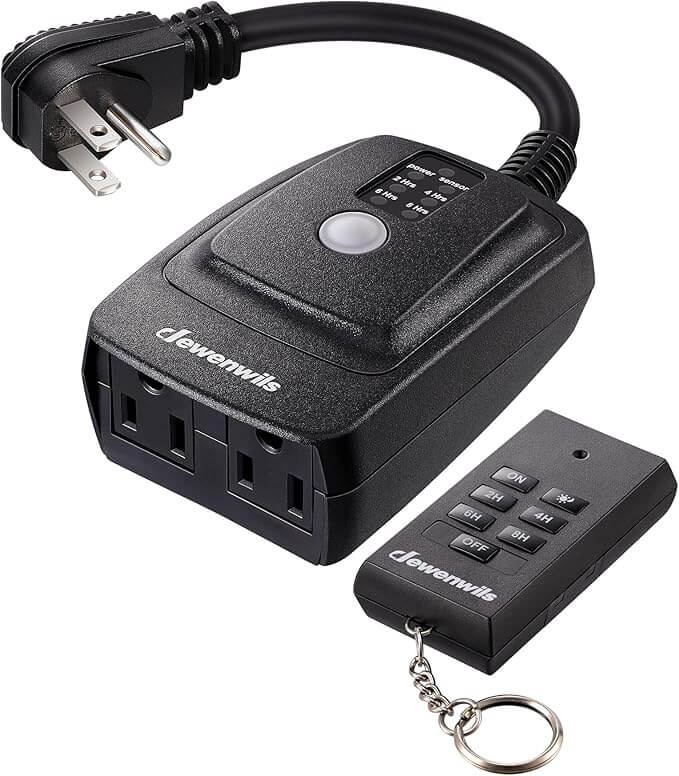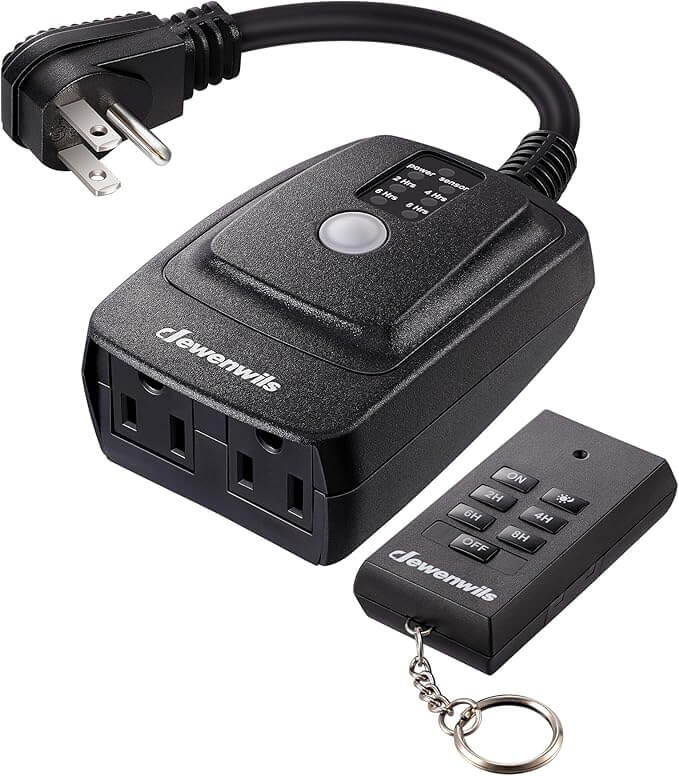
A timer is a small component with a large effect on customer experience. When schedules drift, settings disappear, or connections are exposed, installers receive avoidable service calls. This outdoor timer combines programmable schedules, dual grounded outlets, and a remote-control workflow for seasonal displays.
This guide focuses on the Light Sensor Timer Waterproof, Plug in Timer Switch, 100 ft Range Remote Control with 2 Grounded Electrical Outlets for Outdoor String Lights, 15A 1/2HP UL Listed and the decisions that help contractors turn its listed specifications into a repeatable field plan. For a broader purchasing framework, review How to Buy Commercial Grade Christmas Lights.
Product details to verify
- Always On, Always Off, Timer, countdown, and random modes are described
- Supports two timing schedules with one-minute minimum intervals
- Built-in rechargeable backup helps retain settings during power loss
- Six-inch SJTW 14/3C grounded cord and two controlled outlets
- The listing specifies ETL certification, 15A resistive, 1,250W/10A tungsten, and 1/2 HP maximum ratings
Program around the customer’s real routine
Ask when the customer wants the display on, when the property is usually quiet, and whether special event nights require different timing. Use consistent naming in the work order so office staff can talk a customer through the settings. The countdown and random modes may be useful in other applications, but a predictable recurring schedule is usually easier to support for holiday lighting.
Plan the field conditions
Outdoor placement matters. The listing instructs vertical installation at least two feet above ground to reduce water entry. Keep plugs, outlets, and connections properly protected, use GFCI-protected power where required, and calculate the connected load from actual products. A dual outlet does not double the timer’s total rating.
A repeatable contractor workflow
- Document the desired on-and-off schedule before programming.
- Calculate total connected load and verify every component rating.
- Mount the timer vertically in an accessible, protected location.
- Test both outlets, the remote, backup behavior, and the full cycle.
- Leave simple customer instructions and record the final settings.
Where this product fits
This type of timer fits residential and small commercial displays where crews need flexible schedules and customer-accessible control. Standardized setup notes can turn a frequently misunderstood accessory into a dependable part of the installation.
Build the full job estimate
Estimate quantity from the actual attachment points, power zones, or repair tasks—not from a rough property average. Include compatible companion parts, prep labor, testing, access conditions, removal, and a reasonable service quantity. Small accessories can protect job margin when they are specified up front, but they become expensive when crews discover them after arriving on site.
Plan service, removal, and storage
Add the component to the job’s service notes and photograph any unusual placement. At removal, inspect for cracking, corrosion, deformation, loose connections, or damage and retire questionable parts. Sort reusable hardware by exact type instead of mixing it into a general clip or accessory bin.
Check the current configuration before ordering
Product options and ordering status can change. Use the live product page to confirm the exact variant, specifications, included components, warranty terms, and current ordering details before committing materials to a customer project. Avoid substitutions unless the design, electrical plan, and customer approval are updated together.