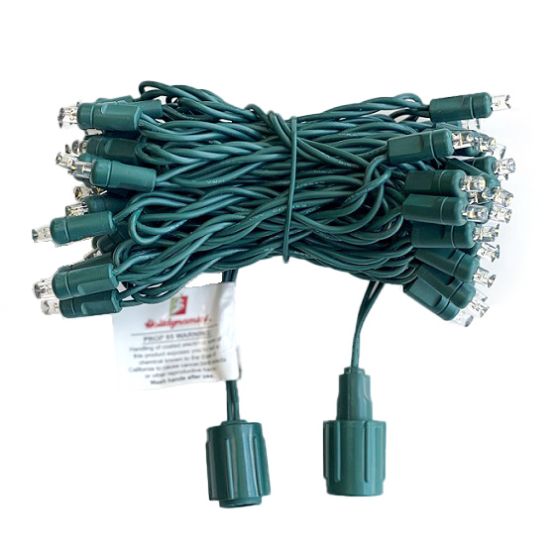
Color-changing mini lights should be designed as a system, not purchased as an isolated strand. Dynamic RGBWW Mini Lights use coaxial connections and require a compatible controller, allowing crews to combine warm white with programmed color and motion effects.
This guide focuses on the Dynamic RGBWW Mini Lights and the decisions that help contractors turn its listed specifications into a repeatable field plan. For a broader purchasing framework, review How to Buy Commercial Grade Christmas Lights.
Product details to verify
- 5MM RGBWW mini-light format
- The listed in-stock strand configuration uses 4-inch spacing and 50 lights
- Coaxial connection includes a gasket ring for seasonal outdoor use
- Compatible controller is required and sold separately; the page identifies controller models 79042 and 79043
- The listing states up to 1,000 lights and approximately 340 feet per controller, with an RF remote range of roughly 50 feet
Design control zones before ordering
The controller location determines cable routing, service access, and how the customer operates the display. Divide a property into logical zones and decide which elements should change together. Verify strand counts and total length against the controller’s published limits, allowing for the exact system configuration and any accessories.
Plan the field conditions
Available functions listed include steady, color change, jump, fade, flash, chase, and other effects. Program restraint usually produces the strongest professional result. Choose a small set of approved scenes, document remote settings, and avoid giving customers an unexplained menu of effects that may be difficult to reproduce after a service visit.
A repeatable contractor workflow
- Map every strand, jumper, splitter, controller, and power point.
- Confirm the compatible controller model and system limits.
- Inspect and seat coaxial gasketed connections correctly.
- Program and document a small library of approved scenes.
- Label zones and keep controllers accessible for service.
Where this product fits
RGBWW mini lights work well in trees, columns, greenery, and feature areas where changing color adds real design value. The system is most successful when controller planning, cable routing, and customer instructions are included in the estimate.
Build the full job estimate
Build the estimate from measured coverage and the exact selected spacing or pattern. Include bulbs or strands, wire, leads, plugs, terminations, controllers or accessories when required, electrical-load planning, fabrication labor, installation, removal, testing, and service stock. Saving the exact variant on the estimate prevents purchasing and field crews from treating similar-looking components as interchangeable.
Plan service, removal, and storage
Photograph completed patterns and label every run or strand group by elevation. At removal, disconnect carefully, inspect sockets and conductors, keep variants separated, and record any failures before storage. Service stock should match the original color, lens, spacing, and system family so a field repair does not introduce a visible mismatch.
Check the current configuration before ordering
Product options and ordering status can change. Use the live product page to confirm the exact variant, specifications, included components, warranty terms, and current ordering details before committing materials to a customer project. Avoid substitutions unless the design, electrical plan, and customer approval are updated together.
Review Dynamic RGBWW Mini Lights product details and options.